
Searching for the best link management plugin for WordPress?
Check out this ClickWhale review, where I am sharing my experiences after using this plugin.
- What is Link Management and Why Should You Care?
- ClickWhale Review: Is It The Best Link Manager?
- ClickWhale Review: Steps to Get Started with It
- ClickWhale vs Competitors: Side-by-Side Comparison
- Real-World Performance and Limitations
- ClickWhale Review Pros and Cons
- FAQs related to ClickWhale Review
WordPress link management sounds like a luxury. Most site owners use whatever links work and don’t think twice.
But here’s what happens when you ignore link management: affiliate links get broken during site migrations, shortened URLs expire, tracking data disappears, and you lose visibility into which links actually drive traffic and conversions.
ClickWhale is a WordPress link management plugin designed to solve these problems. I’ve tested it extensively on both small blogs and larger affiliate marketing sites.
This review is based on real-world implementation, not marketing claims.
I’ll walk you through exactly what ClickWhale does, which specific use cases make sense for it, honest limitations, and whether the $49 to $199 annual price tag makes sense for your WordPress site.
What is Link Management and Why Should You Care?
Before diving into ClickWhale specifically, understand what link management plugins actually solve.
Most WordPress sites use raw links. An affiliate link looks like this: https://amazon.com/dp/B00ABC12345?tag=myaffiliateID. Long, ugly, and contains your affiliate ID in plain sight.
A blog link points directly to the internal post URL. Social media links go to the exact article. These raw links have several problems.
First, if your site gets hacked and URLs change, every link breaks silently. Your users click and get 404 errors. Search engines see broken links.
Second, you can’t track clicks. Did anyone click that product link? You have no idea unless you use separate analytics for every link.
Third, affiliate links expose your affiliate IDs, which competitors can see and potentially abuse.
Fourth, long links look unprofessional and don’t work well on social media with character limits.
Link management plugins create short, branded links that redirect to your actual links.
Instead of the long Amazon affiliate URL, you get yourdomain.com/amazon-review. You can track every click, change the destination URL anytime without breaking links, hide your affiliate IDs, and create a professional appearance.
ClickWhale is one plugin that handles this. Others in the space include Pretty Links, ThirstyLinks, and custom redirect plugins.
ClickWhale sits in the middle with more features than basic redirects, but not as complex as enterprise link management tools.
ClickWhale Review: Is It The Best Link Manager?

Before we dive into the ClickWhale review, let us see an quickly introduction to it.
About ClickWhale

ClickWhale is a link management plugin for your WordPress website. They position it for bloggers, affiliates, and anyone managing large numbers of links.
At its core, ClickWhale lets you create short links that redirect to longer URLs. You attach tracking to those short links. You organise links into categories.
For paid users, you create link landing pages that display collections of related links (think Instagram bio link pages, but customizable and professionally hosted).
The plugin works entirely within WordPress. You manage links through the WordPress dashboard. Links are stored in your WordPress database.
Redirects happen via your WordPress site, so every click passes through your server. This matters because some hosting plans limit redirects.
ClickWhale offers a freemium model. The free version includes basic link shortening, link pages, and tracking code management.
The paid version (Pro) adds detailed analytics, eCommerce conversion tracking, advanced customisation, unlimited links, and UTM campaign tracking.
Best Features of ClickWhale
Let us see some of the best features of the ClickWhale plugin.
Easy to Set Up and Use
Installing and setting up this plugin on your WordPress site is a breeze – no tech stuff is needed.
Just go to your WordPress dashboard, install, and activate the plugin.
If you’re familiar with PrettyLinks or a similar plugin, adding and shortening links in your WordPress dashboard is super simple.
Keep track of your WordPress website effortlessly.
Powerful Link Manager
ClickWhale’s Link Manager is a cool tool that online marketers should check out.
It’s like a toolbox with awesome features to make you more visible online.

ClickWhale creates short links in your own domain namespace. Instead of bit.ly (external domain), you get yourdomain.com/short-link (your domain).
This matters for brand consistency and email deliverability. Many email providers trust first-party links better than shortened links from third-party services.
The plugin lets you customise the link slug.
Instead of random characters, use descriptive slugs like “best-affiliate-products” or “recommended-hosting.” This helps users understand where a link goes and improves trust.
Link cloaking hides the destination URL. Visitors see yourdomain.com/recommendation, but the actual destination stays hidden until they click.
This prevents competitors from seeing your affiliate links and blocks clickjackers from accessing your affiliate networks directly.
Check out: SmugMug Review
Create A Unique Link Page
Now you can be super creative and make your link pages that link up with social media easily.

This is ClickWhale’s hidden gem feature. You create a landing page that displays multiple related links in an attractive format.
Use case: You have 20 affiliate product recommendations. Instead of listing them in a blog post, create a ClickWhale link page. Design it with your brand colours, logo, and custom text. Share the link on Instagram (which restricts users to one link in bio). Visitors land on a beautiful, professionally designed page with all 20 recommendations.
The free version creates basic link pages. Pro version adds advanced customisation: different layouts, custom CSS, background images, button styles, and more.
You can basically build a mini-landing page without leaving WordPress.
Check out: Fastest WordPress Themes
Manage Tracking Codes Easily in WordPress
ClickWhale includes tracking code management separate from link tracking. Add Google Analytics, Facebook Pixel, custom JavaScript, or any tracking code to your site without touching your theme files or HTML.
You specify where the code appears: header, footer, or body. You can conditionally show code based on pages, posts, or categories.
This is useful for testing different tracking configurations without hiring a developer.
However, this feature duplicates what you can do with a custom code plugin like Code Snippets. It’s convenient bundled into ClickWhale, but not a differentiator.
In-Depth Link Analysis
ClickWhale lets you check your websites and pages in detail to see how links are doing.

Free version tracking is basic. You see click count and basic date range filters. That’s it.
Pro version tracking includes detailed analytics like clicks over time, geographic origin of clicks, devices (mobile/desktop), referrer sources, bounce rate, and time-on-site.
You can see which links convert and which waste space.
However, the limitation is that ClickWhale’s analytics are link-focused, not eCommerce-focused.
If you need to know “how many people clicked the link and bought something,” you get limited insight without connecting to Google Analytics or other conversion platforms.
The Pro version includes some eCommerce integration, but it’s not as powerful as native conversion tracking in tools like Thirstylinks.
Check out: Systeme.io Review
Import Existing Links
If you currently use Pretty Links or another link plugin, ClickWhale can import your existing links in one operation.
Your link data transfers: URL, slug, click counts, categories, everything.
This seems minor but matters if you’ve accumulated 100+ links. Manually recreating them would take hours.
One-click import means you can switch plugins without data loss.
ClickWhale in Action: Real Use Cases
Let us see some real-world use cases below.
Use Case 1: Affiliate Marketer with 50+ Product Reviews
An affiliate blogger writes reviews for web hosting, WordPress plugins, and software. Each review contains 3 to 5 affiliate links.
Over a year, they’ve accumulated 200+ affiliate links scattered across 50 blog posts.
Challenge: They don’t know which links get clicked most. Are people interested in hosting affiliate links or plugin recommendations? Without tracking, they waste time writing reviews for products nobody clicks.
ClickWhale solution: Create categories for each product type (hosting, plugins, themes). Organise all links by category. Pro version analytics show that hosting reviews generate 10x more clicks than theme reviews. They double down on hosting content, drop theme reviews, and increase income.
Bonus: When they migrate from Bluehost to WP Engine, they update their hosting affiliate link once in ClickWhale. All 50 links to “best hosting” automatically point to the new recommendation. No broken links, no manual updates.
Value added: 20 to 30 hours saved on migration plus $500+ monthly income increase from smarter content strategy.
Use Case 2: Local Service Provider with Social Media Links
A marketing consultant wants to drive traffic from Instagram to his three main services: brand strategy consulting, social media management, and workshop training. Instagram only allows one link in bio.
Solution: Create a ClickWhale link page with three sections, each linking to different service landing pages. The link page is beautifully branded. His Instagram bio has one link pointing to the link page.
Result: Instead of guessing which service gets most clicks, his analytics show that social media management gets 60% of clicks, brand strategy 30%, and workshops 10%. He launches a workshop promotion. Clicks spike. He now knows how to allocate marketing effort.
Value added: Better understanding of audience interest leads to more targeted marketing and higher conversion rates.
Use Case 3: B2B Company with Multiple Referral Links
A SaaS company needs to share referral links for partners (payment processors, integrations, resellers). Different team members share links in different channels. Links get shared incorrectly, go to the wrong pages, and create poor impressions.
Solution: Organise all referral links in ClickWhale. Give team members access to “branded” versions. All links follow the same format: company.com/partner-name. Analytics show which partners drive traffic. Broken or incorrect links get caught immediately.
Result: Consistent partner experience, better partner relationships, and measurable partner performance.
ClickWhale Pricing Plan
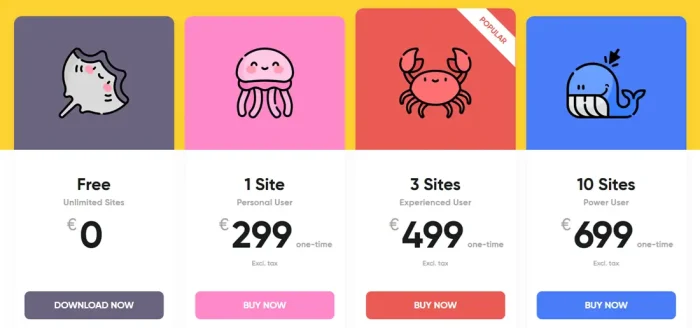
You can use ClickWhale for your basic needs. However, to enjoy the complete features, you need the premium version.
ClickWhale Pro has three plans based on the number of websites it can be used on.
It offers two different payment plans: an annual renewal plan and a lifetime plan.
Here are the prices of ClickWhale Pro:
$79 for 1 site license. Includes 1 year of support and updates ($299 Lifetime).
$129 for 3 site licenses. Includes 1 year of support and updates ($499 Lifetime).
$299 for 10 site licenses. Includes 1 year of support and updates ($699 Lifetime).
It offers a 30-day money-back guarantee period.
| Plan | Annual Cost | Lifetime Cost | Websites | Key Features |
|---|---|---|---|---|
| Free | $0 | N/A | Unlimited | Basic link management, link pages, tracking codes |
| Pro (1 site) | $49/year | $149 | 1 | Analytics, eCommerce tracking, advanced customisation |
| Pro (3 sites) | $99/year | $299 | 3 | Same features as single site, 3 websites |
| Pro (10 sites) | $199/year | $599 | 10 | Same features as single site, 10 websites |
You can try the premium version for 30 days and get a full refund if you are not satisfied with it.
Annual vs Lifetime: Which Makes Sense?
Annual pricing: $49 to $199 per year for one to ten websites.
Lifetime pricing: $149 to $599 (one-time payment). This is 3x to 4x the annual cost, so you break even in 3 to 4 years.
If you plan to use ClickWhale for 3+ years, lifetime pricing pays off. However, most plugin users worry about abandonment. Will ClickWhale still be maintained in 5 years? Lifetime purchases make this riskier. I’d recommend annual unless you’re extremely confident.
What Does Pro Actually Add?
The free version covers basic use cases. The Pro version’s analytics justify the upgrade if you base content decisions on link performance data.
However, if you just need links to work and don’t need detailed analytics, free is sufficient.
ClickWhale Review: Steps to Get Started with It
Here are the steps to get started with the ClickWhale plugin.
Step 1: Download and Install the ClickWhale Plugin
- Download the plugin from WordPress.org or the official site.
- In your WordPress dashboard, go to “Plugins” and click “Add New.”
- Upload the plugin ZIP file, click “Install,” then “Activate.”
Step 2: Access the ClickWhale Menu
Find the ClickWhale menu in your dashboard sidebar.
Step 3: Adding and Managing Links
- Click on “Links” in the ClickWhale menu.
- Add new links, specifying the URL slug and original link.
- Choose redirection type and set link attributes.
Step 4: Creating Categories
- Organise links into categories, similar to post categories.
- Create categories in the “Links” dashboard and assign links accordingly.
Step 5: Building Link Pages
- Customise link pages with brand details and logos.
- Create pages in the “Link Pages” menu, adding links and adjusting colours.
- Optimise for SEO and adjust settings like indexing and opening links in a new tab.
Step 6: Configuring Settings and Tracking Options
- Access the ClickWhale “Settings” menu to configure global settings.
- Set tracking duration and link page behaviour under “Tracking Options.”
Step 7: Adding Tracking Codes
- Embed tracking codes easily without editing CSS.
- Visit the “Tracking Codes” menu, paste the code, choose placement, and enable tracking.
Step 8: Migration and Reset
Use the “Tools” menu to migrate URLs or reset default settings and statistics.
ClickWhale vs Competitors: Side-by-Side Comparison
Three main competitors exist: Pretty Links, ThirstyLinks, and built-in WordPress redirect plugins.
| Feature | ClickWhale | Pretty Links | ThirstyLinks | WP Redirect |
|---|---|---|---|---|
| Free Version | Yes | No | Limited | Yes |
| Link Shortening | Yes | Yes | Yes | No |
| Link Pages | Yes | Yes | Yes | No |
| Analytics | Basic free, detailed Pro | Paid | Paid | No |
| Tracking Codes | Yes | No | No | No |
| eCommerce Tracking | Pro only | Add-on | Add-on | No |
| Price (Pro) | $49-199/year | $99-299/year | $99-279/year | Free |
| Ease of Use | 8/10 | 7/10 | 7/10 | 6/10 |
Pretty Links
Pretty Links is the market leader. It has more users and more third-party integrations. However, it doesn’t offer a free version.
Pricing starts at $99 per year. Pretty Links doesn’t include link pages out of the box; you pay extra for the “Pretty Links Pages” add-on.
Pretty Links has better documentation and more video tutorials, which helps beginners. Customer support is responsive.
However, the feature-to-cost ratio favours ClickWhale. For what Pretty Links charges, you get less in ClickWhale’s Pro version.
ThirstyLinks
ThirstyLinks is older software (launched around 2010). It has a loyal user base among long-time affiliate marketers.
The UI looks dated compared to modern plugins. Performance is solid, but the feature set is stuck in 2015.
ThirstyLinks is worth considering if you need WordPress 5.0+ compatibility for old sites. Otherwise, ClickWhale or Pretty Links are more modern choices.
WP Redirect
WP Redirect and similar basic redirect plugins cost $0. They create simple 301 redirects in WordPress.
You don’t get analytics, link pages, tracking codes, or organisation. They work for 10 to 20 links. For 100+ links, basic redirect plugins become unmanageable.
The Verdict
For affiliate marketers and content creators who want modern features at reasonable pricing, ClickWhale wins.
Pretty Links is established and has better documentation.
If you value hand-holding and ecosystem, choose Pretty Links. If you want better value and analytics included in the base package, choose ClickWhale.
Real-World Performance and Limitations
ClickWhale performs well on most WordPress sites. However, three real limitations exist.
Limitation 1: Database Growth on High-Volume Sites
Every link click creates a database entry. On sites sending 10,000 clicks per day, your database grows rapidly (potentially 100GB+ per year). ClickWhale includes automatic cleanup (delete tracking data older than X days), but you need to configure it.
Solution: Set data retention to 30 to 90 days in the settings. Keep enough data for analysis without bloating the database.
Limitation 2: Page Load Impact
Every link redirect adds a small processing delay (usually 10 to 50 milliseconds). On sites with thousands of link clicks simultaneously (like during a viral post), redirects might queue up, adding noticeable delay.
Solution: Use caching. Enable page caching with WP Super Cache or WP Rocket. Redirects don’t get cached, but the page containing the link does, reducing server load.
Limitation 3: Analytics Aren’t eCommerce-Connected by Default
ClickWhale tracks clicks, but connecting those clicks to actual sales requires Google Analytics setup. If you want “link clicked leads to customer,” you need to configure conversion tracking separately.
Solution: In Google Analytics, set up goals for purchase completion. In ClickWhale Pro, enable the Google Analytics integration. Over time, you can see a correlation between clicks and conversions.
ClickWhale Review Pros and Cons
Let us see the pros and cons of using the ClickWhale plugin.
Pros
- The free version handles basic link management without paying anything.
- Link pages save time creating landing pages; you don’t need a separate page builder.
- Tracking is included in the free version (analytics are Pro-only).
- Affiliate link cloaking protects your affiliate IDs.
- Good value for the price, especially compared to Pretty Links.
Cons
- Analytics aren’t as detailed as specialised tools.
- eCommerce conversion tracking is available but not seamlessly integrated.
- Link pages are functional but less customizable than building actual landing pages.
FAQs related to ClickWhale Review
What is ClickWhale?
ClickWhale is a WordPress plugin designed to help manage, shorten, and track links on your website. It provides features like link management, tracking, and link page creation to enhance your online presence.
Can I use ClickWhale to create link pages?
Yes, ClickWhale allows you to create link pages where you can gather and share all your important links on a single page, making it convenient for your audience.
Is ClickWhale compatible with social media platforms?
Yes. ClickWhale provides creative freedom to connect with social media platforms easily, allowing you to share your important content with followers through a single link.
Is there a free version of ClickWhale?
Yes, ClickWhale offers a freemium model. The free version includes basic features such as Link Manager, Link Pages, and Tracking codes.
Is there a trial period for ClickWhale?
Yes, ClickWhale offers a risk-free trial period of 30 days after purchase. This allows you to evaluate if the plugin is the right choice for your needs, and if not, you can request a refund.
Conclusion
That’s all about the ClickWhale review.
For WordPress users seeking top-notch link management and tracking, ClickWhale emerges as an outstanding choice.
The free version boasts essential features, catering to various needs, while the PRO plan caters to serious marketers, offering advanced analytics and customisation.
What sets ClickWhale apart is its effortless link importing and user-friendly interface, distinguishing it from a crowded field of competitors.
In essence, whether you’re a casual user or a marketing pro, ClickWhale offers a user-friendly and feature-rich experience for all your link management needs.
ClickWhale Review: Is It The Best Link Manager Plugin for WordPress?
- Features
- Ease of Use
- Pricing
- Support
Summary
ClickWhale is an awesome link manager for WordPress. It makes it really easy to create, organize, track, and analyze short and branded URLs.


